Friday, May 22, 2009

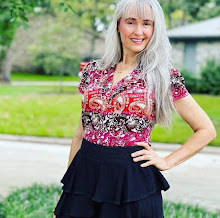
Blogger Buddy Award


I would like to thank JC  for nominating me for this award.  I am honored. I would like to thank you, JC,  for your blog as well. I find your zeal for life and sewing inspirational. Thank you for including me as your buddy.

I'd like to pass this award on to My daughter, , Emily.  She is 8 years old; and she is my sewing buddy.  She is such a blessing to me.  She is such a little sweetie. We have so much fun together. We make a great team.

Thursday, May 21, 2009

How to Save Money on Fabric

Here is an idea to help save money on fabric.  If you are not already a plus size, when you are in thrift stores and at garage sales, keep an eye out for beautiful garments in plus sizes that are marked down.  You can then take the garment apart, and that will be your fabric. Pin your pattern pieces onto the fabric and proceed as you normally would.

Also keep a lookout for beautiful sheets, curtains, and table clothes anywhere from 50 cents to 2 dollars a piece.  That would be a lot of fabric for very little.

Once at a garage sale, I really made out.  I got 15 yards of light colored denim fabric for $8 total.   I have also gotten lots of fabric at thrift stores and Wal*Mart's dollar-a-yard table.

Wednesday, May 20, 2009

How Do I Get Rid of the Little Threads When Unpicking the Seams?

After you are done ripping out your seams, you are left with all of these little bits of thread stuck in your fabric.  Just get yourself one of those lint rollers like they carry at Ikea or other stores and roll it over the threads. It gets them all. It does a much better job picking up all of those little threads than sticky tape does.

Tuesday, May 19, 2009

Attitude of Gratitude Award


I would like to thank my daughter, Emily, for giving me this award. 

The Rules of Accepting and Sharing this Award

1. Put the logo on your blog or post. 

2. Nominate a few bloggers who show an attitude of gratitude

3. Link to your nominees within your post.

4. Comment on their blogs to let them know they've received this award.

5. Share the love and link to this post and the person who nominated you for the award.

6. Tell us how you've come to have an attitude of gratitude.


The following people that I would like to give this award I think are so awesome.  They are awesome seamstresses, and they are all very family oriented.
1)  www.sewchic.blogspot.com make a great mother/daughter team.  They are a close-knit family, and they are a God-centered family, as well as being fantastic seamstresses.
2)  www.retromummy.blogspot.com is an excellent seamstress and mummy.
3)  www.connectingthedots.dk/ is also an awesome mummy and seamstress.

I would like to say that I am thankful to God for the life He has given me, for the awesome husband He has given me and for allowing to be a mommy.  I also am thankful for the freedom to homeschool my children.  I am thankful that He continues to teach me and help me to grow as a person. I am thankful for my loving and encouraging mother who is also responsible for my love of sewing.  I am thankful for the many friends He has blessed me with.  I am also thankful for you, the sewing community.  I could have named so many more of you for this award.  You are all an encouragement to me.  I love going to your blogs.  They are inspiring. I am learning so much from each of you. Thank you for all that you do.

Understanding the Vintage Sewing Pattern


This is one of the beauties of sewing your own clothes, "You have the ability to control your looks if you know how to enjoy sewing. A person who sews well doesn’t worry about the fashion and its influences. They can find the right fit of clothing for themselves in the color of their choice. You need not worry that the color you like is not available in the market. Moreover there is no necessity to restrict yourself to a particular style." You are not bound to whatever is the fad in a particular season or year. "You should know that the clothes worn in the old movies are being revived by the youngsters and some of the clothes worn in these movies are evergreen and will not be out of date at any time. Can we say them as future-proof? Some of the modern movies like Dick Tracy and Titanic bring the old classics to this modern day." When using vintage patterns, because you are using modern-day fabrics, they do not look like costumes. It looks like something you could buy off the rack. 

"With the help of the internet you can easily find the old patterns that are used in the classic clothes. It is easy to make vintage clothes using the vintage sewing patterns.  

"Why you should go for the vintage?" The styles are usually classic in design and you can adjust it, for example, by shortening or lengthening a skirt or shirt length, choosing a different type of sleeve or collar, and choosing your own fabric colors and textures so as to have something that is uniquely you.  

"You can use the vintage sewing pattern so that you are accurate in the time for that pattern. Some of the vintage designs include patterns that are modern like zippers. These patterns change the look of the old clothes. 

"The attitudes and comments at the time of the styles are included in the vintage sewing pattern. For different styles and ages there are many accessories that are recommended. References to the Hollywood or Paris or the queen of society would be there that were popular at the time of the style that you adopt. 

"Using a vintage sewing pattern adds fun. This is one of the reasons for using that pattern. Finding a vintage sewing pattern in original and good condition is very hard." But don't be dismayed. There are many sources for finding vintage patterns that are in excellent condition. Ebay is one source. If you look at my Blog list, I list yet another source. Also, the Big Four pattern companies, Vogue, McCalls, Simplicity, Butterick, have been reprinting some of the original patterns in multi-sizes. 

"However there are methods available to copy the vintage sewing pattern so that the vintage sewing pattern is available to you at affordable cost. By having a copy you have access to the same pattern, the instructions and the comments." Copy the instruction sheet to preserve it. And either copy or trace the patterns pieces, and use the traced or copied version in order to protect the original. "With that you can add your modern touches to that pattern with confidence." By adding your own touches, you make something that is totally new and different and uniquely you. "Problems with the vintage patterns "Of course nothing comes without a problem and so is the vintage sewing pattern. Changes to the pattern have to be made so that you can use the modern fabrics that are available in the market. You may need to alter the pattern to fit the modern figure" There are many books that explain how to easily alter a pattern, Nancy Zieman being one of the authors. 

"If the instructions are missing then it poses you a challenge to get the exact pattern needed." Many sellers will tell you if the pattern is complete or not so that you can avoid buying a pattern with a missing piece. "Due to these reasons the vintage sewing pattern should be reserved for the experienced people rather than the adventurous beginner in design." There are many vintage patterns that lend themselves to beginners, though.  

"Sometimes adventures pay off. So you can give it a go even if you think it is a little bit difficult for you." It's good to stretch yourself and try patterns that may be out of your comfort zone. That is how you learn and gain new skills. There are many resources for learning techniques you haven't learned yet. I have video tutorials listed on my blog list and in previous posts. And of course you can always ask an experienced seamstress when you get stuck on an area, then you can continue to move forward with your project. I encourage you to give it a try. You'll be so glad you did. It is a very satisfying and rewarding experience.  

I'll be posting pictures soon of of two dresses I've sewn, one from 1944 and one from 1974. 

"If this article was useful to you about sewing patterns and you'd like more information about sewing and other hobbies take a peek at our website [http://www.allcraftsandhobbies.com/]Crafts and Hobbies for more resources. Article Source: http://EzineArticles.com/?expert=Ian_Henman http://EzineArticles.com/?Understanding-the-Vintage-Sewing-Pattern&id=325513

Marking Notches


I have a couple of suggestions for marking notches.  The first is:  after you cut out your pattern piece, then go back and make a small snip through both layers of the fabric and the pattern tissue inside the seam allowance at each notch.

Another suggestion for marking your notches is to first cut out all of your notches from the pattern pieces.   Fold your fabric so that right sides are together. Next lay and pin your pattern pieces onto the fabric according the layout suggestions on your pattern instruction sheet.  Then when cutting out each piece, cut straight across on the fabric cutting line.  Then place a dot on both sides of the fabric (wrong sides) with a fabric marking pen in a contrasting color where each cut-out notch is.


Wednesday, May 13, 2009

Keep Those Often Used Patterns Handy

If you have patterns that you repeatedly use, don't fold them up and place them back in the envelope. Drape your pressed pattern pieces over a hanger, pinning the smaller pieces to the bigger ones.  Put the pattern envelope in a plastic bag; punch a hole at the top of the bag and hang the bag over the hanger. Hang them in the closet. Now your favorite patterns will always be ready to sew. I sew in our dining room.  I purchased a three-door wardrobe from Ikea.  I keep it right there in the dining room. I use this to store away much of my sewing supplies.  I keep fabrics I plan to use soon draped over a hanger as well as favorite patterns that I will use again also draped over a hanger.

Thursday, May 7, 2009

Stop Backstitching When You Sew! Eliminate That "Homemade" Look!


When you sew, why do you backstitch when you begin and end a seam?
Most of you backstitch because someone on your sewing learning path said you should do that to keep your seams from coming apart.
Well, now, I want you to forget that reverse button and listen to some common sense stuff!
When you backstitch, you go forward, back and forward again, right? That puts 3 layers of stitching at the beginning and end of every seam.
Even if you back up straight, which is almost impossible to do, 3 layers of stitching creates a lot of bulk in these areas. This is really bad on thin, sheer fabrics and ugly, too.
That part of the seam doesn't open out flat or press well, either. It helps to make lumpy corners, too. Who needs lumpy corners? Gives the garment that "homemade" look! Yuk!
OK, I can hear you say that you don't backstitch. You either hand tie your threads or sink or drop a knot with your machine by stitching in place for several stitches.
That's fine, but then you trim the seam allowance down and cut off that knot, right? So why waste the time to tie or sink knots?
So, you are asking, "What is the trick to keep seams from coming apart if you don't backstitch?"
Try this! It just makes sense!
For about 1" - 1-1/2", begin and end all your seams with "short stitches."
Instead of pressing the reverse button to backstitch, set your stitch length down to make 18-20 short stitches per inch.
On some machines, that is number 1. You will have to check it on yours. See below how to do that.
Short stitches secure your seams and eliminate all bulk even after you trim the seam allowance. This makes much neater, flatter corners. Everyone wants flat corners, right?
After you stitch the seam, press it open before you trim anything off the seam allowance. It is easier to press a wider seam allowance open than a tiny one. You won't burn as many fingers that way.
Besides, pressing seams open first will give you a much sharper, cleaner, more professional looking finish.
All seams should be "sandwiched pressed" (both layers together) to set the stitches and then pressed open with the tip or point of the iron right along the stitching line, then pressed flat open.
Notice, I said "pressed" - that's a lifting, lowering motion - not "ironed" - that's a sliding, stretching motion.
Now, if the seam allowances are going to lay one on top of the other in the finished garment, you would then press them to one side. But, when your trim, make sure you trim one of the seam allowances a little less than the other one to create a staggered or layered effect. This is often called, "grading the seam allowance."
The wider seam allowance should always be the one that lays next to the outside of the garment. This greatly reduces bulk in seams.
You can sometimes achieve this effect by angling your scissors when you trim both seam allowances together. I generally prefer to use my "duckbill" scissors for this job.
Here is a tip if you don't know where to find 18-20 stitches on your machine.
To easily find out how many stitches per inch is represented by each number on your sewing machine's stitch length indicator, try this technique:
Thread your sewing machine with a dark colored thread.
Pin 2 small pieces of light colored cotton broadcloth fabric together one on top of the other.
You want the dark thread on the light fabric so you can see your stitches really well. You want 2 layers of fabric because your seams are usually made with 2 layers of fabric.
Draw two 6" long lines exactly 1" apart on the top layer. Use a dark pen or pencil for this. It should be a thin line, not a wide, fat line.
Set the stitch length on your sewing machine for the highest number. Example: No. 4 or 6 or whatever it is.
Beginning about 1/2" above the top line, stitch across the 2 lines and beyond the bottom line about 1/2".
Now, count the stitches between the 2 lines that are 1" apart. Example: 8 stitches.
Write the Stitch Length Machine Number (Example: 4) and the number of stitches per inch beside it (Example: 8). I write mine on the fabric test sample like this: #4=8.
Move over on the fabric and select the next number on your machine and repeat the process until you are down to the lowest number.
If you can't see the stitches well enough to count them accurately, use a magnifying glass.
Keep this test sample in your sewing notebook for reference.
When you learn where your stitch length must be set to have 18-20 stitches per inch, make a note or mark it until you remember to reduce your stitch length each time you begin and end a seam.
It will take a while to break your old habit of backstitching, but you will see better results with short stitches.
Try it! It just makes sense!
=-=-=-=-=-=-=-=-=-=-=-=-=
©2005 Marian Lewis – All Rights Reserved
1st Step To Sewing Success
Marian Lewis is a sewing instructor and the creator of an amazing new fitting method for hard-to-fit sewing folks.
In her ebook, "Common Sense Fitting Method For Hard-To-Fit Sewing Folks Who Want Great Fitting Skirts And Pants", find out step-by-step WHAT you really need, WHERE you really need it and HOW to apply that to a commercial sewing pattern.
For more information, go to: => http://www.1ststeptosewingsuccess.com/fitting.html
Marian is also the author of other eBooks related to sewing including, "Sew A Tee Pee And Accessories For Your Tribe Of Kids" where she teaches basic sewing techniques while you have fun doing it!
To learn more, go to: => http://www.1ststeptosewingsuccess.com/sewing.html
To discover sewing and fitting secrets to achieve sewing success, follow the link: => http://www.1ststeptosewingsuccess.com/
Article Source: http://EzineArticles.com/?expert=Marian_Lewis [http://ezinearticles.com/?Stop-Backstitching-When-You-Sew!--Eliminate-That-Homemade-Look!&id=90821 ]http://EzineArticles.com/?Stop-Backstitching-When-You-Sew!--Eliminate-That-Homemade-Look!&id=90821


Wednesday, May 6, 2009

Needle Threading Made Easy - Tip For Hand Sewing


My mom called me today with this great tip on threading hand sewing needles. She's known about this for years and never thought to tell me until now. Well, I'm glad she finally shared this with me because it's incredible. It's so much quicker and easier and will save me a lot of frustration.

I just tried it myself. Wow! All you do is wet the eye of the needle. The moist eye will suck the thread right into the hole. It's that simple. You don't need to wet the thread. You don't need to use a needle threader. Just wet the eye of the needle. Try it now. You won't believe it. It works like a charm.

I'd love to hear back from you after you give it a try.


Money Saving Tips For Sewing

Many people think that the fabric needed for sewing is really expensive. With the exception of specialty fabrics, this doesn't have to be true. You can find fabric at very reasonable prices and it's easier than you think. Between sales, memberships, online shopping and more, you can save a lot of money. Here are six tips to help you start saving now!
Be creative. You don't always have to go to a fabric store to find your fabric. Whether you're looking for small or large pieces, think outside the box. Thrift stores and dollar stores can be great places to find material. As long as you like the fabric, buy it. Buy a bunch of shirts and cut them into whatever shape you need to create a patchwork quilt. Buy bedspreads to create shower curtains or use them as the backing for a quilt. If you're buying used clothes, make sure to examine them for stains or holes. As well, make sure to first wash the fabric before you use it so that you know it is clean.
Look for sales. This is a classic that never changes and now it's easier than ever. Before you would actually have to go to a store or wait for a flyer to come in the mail in order to find out if there was a sale on. But now you can go online. First, go to the website for each store that you like to shop at and look for any announcements of sales. While there, take a look for clearance or sales items that you can buy online. Next, sign up for newsletters and promotional offers that are sent by e-mail. Check your e-mail regularly so that you don't miss out on any last minute sales.
Get the kids involved. Want to create a unique look or an exciting print? Buy some fabric paint and let the kids go wild. Let them come up with their own designs. Just be sure to cover the floor or table with newspaper or plastic if your kids are really messy. Not only is it an easy clean up and you won't have to worry about your furniture becoming damaged, but you'll feel more relaxed and able to enjoy the experience a lot more.
Join memberships. A lot of stores offer memberships for a low yearly subscription price. In return, you'll receive extra discounts for members only, points that can be redeemed for merchandise and advance notice of sales. If you do enough sewing or if you have a large project to do, the membership will pay for itself with the amount of money you save.
Look for bargain shops. Ask your friends if they know of any stores that sell fabric at great prices. You can find bargain stores that carry only fabrics at a cheaper price than the big name stores. Bargain stores are often cramped and may not offer the service you are use to, but the savings are worth it. As well, you often have to search through the material to find what you are looking for, but you can find gems along the way. I have a friend that will only buy fabric from these bargain stores because the deals are so great!
Check the want ads or eBay. Sometimes people buy material that they never use and will sell it cheap just to get rid of it. If you are able, take a look at the fabric before you buy to ensure that it is clean and doesn't have any large holes or tears in it. Then enjoy the bargain you just found!
Please visit our [http://www.beautifulcreations.ca/Sewing/QuiltingFabricKits.htm]Sewing Pages for a wonderful assortment of fabrics at terrific prices. While you are there, check out our [http://www.beautifulcreations.ca./ProjectIdeas/ProjectIdeas.htm]Project Ideas page for free sewing projects, complete with full instructions.
Article Source: http://EzineArticles.com/?expert=Joanne_Jones http://EzineArticles.com/?Money-Saving-Tips-For-Sewing&id=2014873

How to Organize Patterns Printed From the Internet

Have you ever seen a great tutorial for a quilting or sewing project from a blog or website and printed it off? And then you saw another one? And then another? Soon, you have pages flying all over your house and you don't know where you got them from and they are in no kind of order.
Well, if you're looking for help organizing your sewing and quilting patterns printed from the Internet, you have come to the right place. This article will show you how using office supplies can help you easily organize all that wonderful information.
The first thing that you will need is a three-ring binder. Do not get one of those small ones. You will need a binder that has at least a two-inch ring. It should also have a pocket on the spine for an insert and a clear front where you can insert your own cover page. I'm thinking of the binders you receive at conferences. The binder should also have two pockets.
Once you have the binder, you will need to order a box of sheet protectors. Now check to make sure that you have enough ink in your printer.
Once you have these three items, you are in business. Every time you print a pattern from the Internet, slip it in a sheet protector and place it in the binder. Always, always, always write down the URL of the site where you printed the pattern, the name of the site, a contact email and any restrictions on use. By the time you want to use the pattern, you may have forgotten this information.
Follow this process on a regular basis and soon you have all your patterns in one place. I also place any patterns I like from quilting magazines in my binder.
If you are on a buying diet, flipping through your binder is almost like looking at a catalog. It is better than a catalog, though, because you already have all the patterns!
You will want to label your binder on its spine so that when you see it on the bookshelf, you can immediately pick it out. As your pattern collection grows, you might have a separate binder for handbags and wallets. Another binder may contain only quilt pattens. Because you can switch out the paper in the binder, you are not limited to what to choose.
The advantages of this system is that you keep your patterns in tact. Plus, you can find that perfect pattern more easily, leaving you more time for sewing! And isn't that what's important?
Visit [http://www.squidoo.com/begquiltbooks]How to Choose A Beginning Quilting Book for information on starting quilting.
Article Source: http://EzineArticles.com/?expert=Maybelle_Maddison http://EzineArticles.com/?How-to-Organize-Patterns-Printed-From-the-Internet&id=1076070

Tuesday, May 5, 2009

Organizing Vintage Patterns

I have a large collection of vintage patterns. They are all in one box. I love to look at them and dream and plan about what to make. But they are not organized, and it is difficult to get them out and look at them and put them back. They are jammed in this little box pretty tightly. Also, I hesitate buying more vintage patterns because I'm afraid I may already own them. I've thought about copying the pattern envelopes and putting them in a binder or folder that I can take with me when antiqueing so when I spot one I would like to buy I can quickly see if I already own that one or not.

I was reading another blog and came across this awesome idea for organizing the vintage patterns. Place each pattern in a separate sheet protector. Then place all of these in a three-ring binder. Then you can easily flip through and look at them whenever you want, take them shopping with you, etc. Place the patterns themselves in a 9 X 11-inch envelope, labeled or with a copy of the pattern envelope pasted to the front of the envelope, in a box. When you sew up the pattern, put it in a different box labeled completed "Vintage Patterns." Then you'll know at a glance which ones you've sewn and which are still left to be sewn. I love this idea so much, that I am definitely going to do this with my patterns. I hope you like this idea. Let me know what you think or if you have any other ideas for organizing your vintage patterns.

Fabric Buying - How Many Yards Should I Buy?


The past few weeks I have been sorting through my overwhelming collection of fabric. Yes, for most of you this may only take a few hours or a couple days, but for my toppling stash, it can very easily take a couple of weeks! :) As I am sorting different pieces into piles for projects, several thoughts are running through my mind - Why did I ever buy this fabric? Why didn't I buy another yard of that? Oh, I wish I had the coordinate to this floral! I'm tired of this fabric; it has sat on my shelf for over 5 years and I still haven't used it.
Often I will end up with more fabric than I need for a project or not quite enough for what I am wanting to do. What are my guidelines for buying fabric? Everyone has their own ideas, but here are a few of my thoughts...
When I first started sewing and buying fabric, I had a 3 yard rule. It didn't matter what it was, if I liked it, I bought 3 yards. In my mind this gave me enough for several kinds of garments, lots of quilt blocks and borders and plenty for cutting and stitching errors. Several years later, I knew my 3 yard rule had to change. Not only was I running out of space to store all my fabric, but my checkbook just couldn't handle the expense.
I desperately needed to develop a new strategy for buying fabric, so I came up with the following rules:
It's a piece I love & can use in various ways, 3-4 yards.
It's something I like & don't have anything that is similar, 2-3 yards.
I absolutely love it, but don't have any idea what I'll use it for, 1-2 yards.
It's unique & different, but not my favorite, 1/2 - 1 yard.
It's on sale for a fantastic price & can be used in a hundred different ways, whatever is left on the bolt.
Now, with quite a fabric stash built up, I don't always buy following these guidelines. Over the years my taste and thinking in fabric has changed. Some fabrics I have used and am now tired of trying to use in new projects. A few are dated in the sense that some prints and colors are popular for a time and then go out of style. I have also developed more of a feel for which fabrics I will be more likely to use and what projects I can create from them.
I still love fabric and will indulge in several yards here and there, but not to the extent that I did in past years. I try to keep in mind the following:
I'm using it for a project right now, whatever I need plus 1/4-1/2 yard extra.
It's a solid, marbled, textured, or tone on tone print that can easily be used to stitch embroidery designs on, plus many other uses, 3-4 yards.
It's a novelty fabric, floral design, kid's theme or Christmas print and I love it, 1-2 yards.
What's my theory behind these guidelines? If I am only purchasing a yardage amount for a project, I like to have a little extra. That way if I make mistakes such as figuring wrong measurements or cutting wrong sizes, I'm still ok. A solid, marbled, textured or tone on tone fabric is perfect for embellishing with embroidery; for obvious reasons - the designs will show up on these fabrics versus a busy print. Not only are these pieces great for embroidery, but they also work well for blending or coordinating novelty and floral print fabrics. A fabric that is an obvious or busy print is more limited and can't be used quite as many ways as a solid, so I try not to buy as much of it. It can easily be incorporated with several solids or tone on tone fabrics.
This lets me get the fabric I need, while letting me purchase some fabric for future use. It keeps my fabric stash in check, but doesn’t let it dwindle down to nothing! There are still times when I enter a fabric store or go online and buy more than I really need. Or as my mom used to say when I would come home with a sack full of fabric or another box of fabric arrived at our front door, "You just can't stand it; you just had to buy it!" But when starting a new project, I try to use fabric from my collection with maybe only needing to buy a piece or two to blend in with what I already own.
Do I regret having the fabric that keeps my shelves overflowing? No, definitely not! Maybe I went a little overboard, but I have found it very useful to have multiple pieces in several colors of prints and solids. I can pull out pieces and coordinate the colors I want for whatever project I am currently work on. I may only need one or two additional pieces to complete it or perhaps none at all.
The next time you are ready to buy yards of fabric, keep in mind what you are going to use it for. Is it just something you love and will not really use? Or is it a marbled or textured piece of fabric that can be used to stitch embroidery designs, blend with floral or novelty fabrics or used as a quilt backing?
Do keep in mind that your fabric buying habits and ideas will change. There will be times when you are sewing more projects with prints versus solids or batiks. Or perhaps two or three colors will grab your attention for several months. There are most certainly no rights or wrongs in purchasing fabric, just different ideas. Thinking about what you are buying and the reason for it may help your stash to be put into quilts and other projects instead of just sitting on the shelf.
Serena Smith is an avid embroidery and quilting enthusiast living in Kansas. Creating new projects and sharing them with others through local classes and online lessons is one of her greatest joys. Visit her website, [http://www.embtreasures.com]Embroidery Treasures, for fun projects, helpful tips, inspiration, notions, fabrics and embroidery supplies!
Article Source: http://EzineArticles.com/?expert=Serena_Smith http://EzineArticles.com/?Fabric-Buying---How-Many-Yards-Should-I-Buy?&id=507799


Sewing Thread - Stitching It All Together


Thread is a tightly twisted strand of two or more ply of yarn used for hand and machine sewing. Some facts about sewing thread:
The difference between thread and yarn is that thread is used to sew together garments and other products, while yarn is a collection of fibers that is woven or knit into textiles. All threads are made from yarn, but yarn is not made of threads.
The first 'thread' to be used in sewing was made from animal sinew and plant fibers.
There are three types of thread, animal, plant and synthetic, based on the materials they are made from.
Silk is an example of thread made from animal products. The silk caterpillar weaves a cocoon made from silk that it produces. These cocoons are unraveled, and two or more strands are twisted together to form silk thread. Silk makes a very fine, stretchable and strong thread.
Cotton is an example of plant fibers used to make thread. Fibers of cotton are spun into a fine yarn; two or more strands of yarn are twisted together to make the thread. Cotton thread tends to shrink and is not as strong as silk thread. The thread is singed over an open flame and mercerized (dipped in a solution of caustic soda) to improve its strength and give it sheen.
Nylon and polyester thread are examples made from synthetic materials.
Ninety-five percent of all thread of all kinds manufactured are used in industrial and commercial sewing.
The development of the cotton thread industry in England was the result of a blockade during the Napoleonic Wars in the early 19th century. This prevented raw silk from entering the country, so no silk thread could be made for sewing. Patrick Clark invented a method for twisting cotton together to make sewing thread.
The original threads made by Clark were not string enough to use in the new fangled sewing machines of the later 19th century. George Clark, a Grandson of Patrick, developed a six-stranded thread with the qualities necessary to be used in sewing machines.
Alan Beggerow is a free lance writer. Visit his writing services website, Ghostwriter, at http://www.ghostwriterboo.blogspot.com/
Article Source: http://EzineArticles.com/?expert=Alan_Beggerow http://EzineArticles.com/?Sewing-Thread---Stitching-it-All-Together&id=1076030


Monday, May 4, 2009

How to Sew - 6 Steps to Choosing the Right Needle for Sewing


Your project and the fabric you purchase will determine the choice of a needle and thread. If you are sewing a project requiring batting or a project which requires heavier fabric the choice of your needle will be totally different than compared to when you are sewing a fabric or project which is medium weight or light weight. Although most of the patterns do not mention the needle and thread size, the following guideline will help you make a fair choice of a needle and thread for any project.
1) There are three types of needles
Sharp point for woven fabrics
Ball point needles for knit fabrics
And wedge point needles for leather and vinyl material
2) Delicate fabrics like silk and lace need size 9 needle of Sharp Point needles
3) If your fabric is Light weight for example Chiffon, Organdy, Crepe or Batiste then the Sharp point needle size would be 11/80 and thread size would be 60.
4) For medium weight fabrics such as muslin, wool crepe, linen, gingham, gabardine, flannel or corduroy use Sharp point needle of size 14/90 and thread of size 50.
5) For medium to heavy fabrics like bonded woven, canvas, coating, denim, duck, sailcloth, or for projects with batting use needle of size 16/100 and thread size 40 or heavy duty thread.
6) Knits such as jersey tricot, bonded or double knits you need to use Ball Point needles which are specifically designed for knits and are available in sizes from 9 to 18 the larger the needle size, the more "rounded" the needle point is. Ball point needles push between the fabric yarn rather than cutting through the fabric yarn.
Before starting any new project always use a new needle and be sure to use the same size and type of thread in the bobbin as the top thread. For most fabrics cotton wrapped polyester size 50 thread can be used. If in doubt ask the stores clerk when you purchase the fabric on the size of the needle to be used. Express yourselfJini Pinto
If you need more information and tips on how to sew, learning to sew, tips to improvise your sewing, sewing for beginners, reading sewing patterns, embroidery and beads and sequins to embellish your sewing projects and instructions how to sew a sash or how to make a homecoming sash, how to sew a tea cozy, sew beauty pageant sashes, how to sew a headband or hair band, different techniques to improvise and to learn how to sew, free sewing patterns, headbands with ribbon bows, fabric jewelry pouch, place mats, napkins, no sew projects with fabric and many more visit http://www.step-by-step-sewing.com/
Article Source: http://EzineArticles.com/?expert=Jini_Pinto http://EzineArticles.com/?How-to-Sew---6-Steps-to-Choosing-the-Right-Needle-For-Sewing&id=1505094


Keeping Sewing Projects Organized

To keep from misplacing the thread, a zipper, or a pattern piece, keep your sewing projects boxed. You'll need a small see-through plastic box. Gather together your pattern, fabric, thread, zippers, buttons, interfacing, etc., and place them in the box. Everything will be in one place when you are ready to sew. When you are done sewing each day, put it all back in the box to keep from losing anything.

The Sewing Thimble - For Seamstress and Digitabulist


A sewing thimble is worn on a finger or thumb by someone doing hand sewing to help push needles through the material being sewn and to prevent fingers getting stuck by the needle. Some history and facts about the sewing thimble:
Thimbles of one sort or another have probably been around since the beginning of sewing, more than five thousand years ago.
The oldest known thimble is made from bronze and dates from the 1st century A.D. It was found in the ruins of ancient Pompeii.
Thimbles have been made from many different materials, including all types of metal, wood, glass, porcelain, bone, leather, rubber, whale bone, marble and ivory. Thimbles made for the use of royalty were fashioned from diamonds, sapphires and rubies.
Hand-made metal thimbles were made by either casting the thimble in a mold, or rolling a piece of metal into a cylinder and soldering a cap onto it. The dimples in the thimble were punched by hand.
Thimble production became mechanized around 1850 in England. The dimples were no longer hand-punched in to the thimble, but were done by machine. Industrially manufactured thimbles differed from hand made in that the metal was much thinner, the top of the thimble was flat and the dimples were made in a regular pattern.
In the 19th century higher quality thimbles began to be made from silver. This metal is quite soft and a steel needle sometimes pierced the thimble. So a steel thimble was made and covered inside and outside with silver.
Fine china thimbles were used for sewing delicate silk, as the thimble was very hard and smooth, thus eliminating any chance of snagging the material.
Thimbles are more than an object for use by seamstresses. They have become works of art in their own right. From early hand made ones to modern ones decorated in many different ways, thimbles are a highly collectible item. Sewers and non sewers have made thimble collecting a popular activity. People that collect sewing thimbles are known as digitabulists.
The most expensive thimble on record was auctioned off at a London auction house. It sold for over $39,000 in 1992. It was a 16th century gold and jeweled thimble thought to be a gift from the Mogul court in India to Queen Elizabeth I.
Alan Beggerow is a free lance writer. Visit his writing services website, Ghostwriter, at http://www.ghostwriterboo.blogspot.com/
Article Source: http://EzineArticles.com/?expert=Alan_Beggerow http://EzineArticles.com/?The-Sewing-Thimble---For-Seamstress-and-Digitabulist&id=1006189


Sunday, May 3, 2009

Buttons - History and Facts


When did buttons begin to be used? What was used to secure clothing before them? Some history and facts about the button:
Button-like objects have been found in the Indus Valley of ancient Pakistan and date back to around 2000 B.C.E. These were not used for fasteners, but for ornaments. Before they were used for fastening, pins, leather lacing and belts were used to secure clothing.
Before buttons could be used as fasteners, the button hole had to be devised. Evidence dates the first button and button hole closure systems to the 13th century in Germany. This may have been a solution to the problem of how to secure clothing that was becoming more and more form-fitting, without having to resort to sharp pins.
As with most anything that is new, they became a fad. Buttons and button holes covered the clothing of the well to do. The number of them and what they were made out of became a status symbol. It has been rumored that King Louis XIV of France spent over $5 million on them in his lifetime.
Ever wonder why men's suit coats have non-functioning buttons sewn on the sleeves? Some say they are just for decoration, but there is also the story that King Frederick The Great of Prussia started the practice in the 18th century. The rumor goes that after an inspection of his troops, he ordered that buttons be sewn on the sleeves of their coats to discourage them from wiping their noses on them!
The Scovill Manufacturing Company in America made a set of gold buttons with the profile of George Washington on them that were presented to Marquis de Lafayette during his U.S. visit in 1824.With the increased cost of ivory in the 19th century, button manufacturers began to make them out of a nut from a specific kind of palm tree in South America. This is called vegetable ivory, or corozo. When the nut is dried, it is a very reasonable facsimile for genuine ivory, and is still used today.
The first buttons made from celluloid, one of the first types of plastics, were made in the 1860's.
Before World War One, most button manufacturing was done in Europe, specifically England. After the war, the United States became the center of button making until modern times.
Alan Beggerow is a free lance writer. Visit his writing services website, Ghostwriter, at http://www.ghostwriterboo.blogspot.com/
Article Source: http://EzineArticles.com/?expert=Alan_Beggerow http://EzineArticles.com/?Buttons---History-and-Facts&id=915658


Saturday, May 2, 2009

Cleaning Clothing Iron - Getting off Starch & Sizing

This question came from one of my readers:

I am just loving your blog. Fun! I have a question for you. I had to use spray starch when ironing last week and I got some on my iron. How do I get that nasty black stuff off? It is getting on the other clothes when I ironed this week!--Shannon

To get spray starch or sizing off of your iron clothing iron, here are some things you can try:

1. Heat the iron to a nonsteam, medium heat before cleaning. Sprinkle a generous layer of table salt over a brown grocery bag (use one that has no writing on the top surface). The salt is abrasive and will remove residue. Iron over the salt to remove starch and debris from the surface of the iron.

2. Set the iron for dry ironing (no steam) and maximum temperature. When good and hot, rub it firmly on a wet terry cloth towel. The gunk will steam off the iron and transfer to the towel. This is better than steel wool pads, which can get rust and soap gunk down into the steam vents which will release on clothing later.

3. While iron is cold, use an SOS pad to clean it; then buff it up and it will look brand new.

4. Try a Mr. Clean Magic Eraser.

Zippers - History and Facts


The zipper is found everywhere in the modern day world, and is used in myriad applications. But the common zipper was not so common not so long ago:
Elias Howe, one of the pioneer inventors of the sewing machine, patented an early type of zipper in 1851 called The Automatic, Continuous Clothing Closure. His sewing machine took up most of his time, and he abandoned his early type of fastener.
The next person in the line of zipper evolution was named Whitcomb Judson. A tinkerer and experimenter, Judson invented many labor saving devices, including a type of fastener he patented called The Clasp Locker in 1893. Some of these fasteners were used by 1905 in the garment industry, but proved to be impractical.
The next step in zipper evolution led to the zipper as it is known today. An employee of Judson's named Gideon Sundback first patented his Hookless Fastener in 1913, and with further improvements patented the new and improved version as the Separable Fastener in 1917. One of the first large customers for this fastener was the U.S. Army and the fastener was used in apparel and gear for U.S soldiers in World War One.
How did the fastener get the name 'zipper'? The B.F.Goodrich company opted to use the new fasteners on its rubber galoshes. An executive trying out a prototype of the galoshes by sliding the fastener up and down, and said, "Zip'er up!", emulating the sound made by the fastener. Thus the name zipper came into being. The story sounds apocryphal, but B.F. Goodrich registered the name as a trademark for overshoes with fasteners, Zipper Boots, in 1925. Other items began using the fastener, and the name 'zipper' stuck. B.F. Goodrich sued to protect its trademark, but was only allowed to retain its rights for 'Zipper Boots' and not for the name of the fastener.
For the first twenty years of the zipper's existence it was used almost exclusively for boots and tobacco pouches.
In the 1930's sales campaigns for children's clothing that were equipped with zippers stressed the independence the fastener would give children to dress themselves. When French fashion designer in 1937 raved about the zipper being used in men's pants, the zipper replaced buttons for fastening the fly of men's trousers.
Clothing with zippers was seen as inappropriate for women because the clothing could be taken off quickly. Many religious leaders frowned on the use of zippers for this reason, and zippers were found mostly in men's and children's apparel for a number of years.
Zippers today are made not only from metal, but nylon and other materials. They are available in many different colors, lengths and styles.
Alan Beggerow is a free lance writer. Visit his writing services website, Ghostwriter, at http://www.ghostwriterboo.blogspot.com/
Article Source: http://EzineArticles.com/?expert=Alan_Beggerow http://EzineArticles.com/?Zippers---History-and-Facts&id=909604


Friday, May 1, 2009

Natural Fibers - The Beginning of Textiles


When early humankind needed warmth and protection for their bodies, what did they use? Animal hides, grasses, bark and other plant material fashioned into crude garments most likely. When was it discovered that fibers from plants and animals could be fashioned into something much more flexible, versatile, and attractive? When was cloth invented? There is much scientific and archaeological inquiry devoted to trying to answer that question. As for the fibers themselves? There are four main types of natural fibers used in the creation of fabric and textiles; flax, cotton, wool and silk.
Most historians are in agreement that the first fiber used for the making of textiles came from the flax plant. The fibers in the stem of the plant are removed, cleaned, and woven together to make linen. Flax fibers were use to make linen over 5,000 years ago, and was of such value that it was used for burial shrouds for Egyptian Pharaohs. The Egyptians mastered the art of making fine linen, as some linen items found in tombs have threads so fine that they were woven 200 to the inch.
There is archaeological evidence that dates to 3,000 years ago concerning the growing of cotton in the Indus River Valley region of Pakistan, and the use of it in making cloth to make apparel from. It was also being used in ancient Egypt. It is believed that cotton was brought to Europe around 800 from Arab merchants. The invention of the cotton gin in the late 18th century combined with the dawn of the industrial revolution to help create inexpensive textiles.
Wool is one of the most versatile fibers known. It can be used to produce very lightweight fabric to thick, heavy fabric. The oldest documented piece of wool textile was found in a bog in Denmark that dates to 1500 B.C.E. The ancestor of the domesticated sheep had long coarse hair that protected a short under layer of fleece. It is this short under layer that is used in the production of wool textiles. Careful breeding has lead to over 40 different varieties of sheep used in the production of wool that utilize that soft under layer. Wool has unique properties of water repelling and water absorption that no man made fiber has been able to duplicate. Wool remains a versatile and much-used fiber for all kinds of apparel and other applications.
The beginnings of silk is wrapped in the legend of The Goddess of Silk, the wife of the mythical Yellow Emperor of China, who is credited for introducing silk to China over 5,000 years ago. Silk is derived from the cocoon of a specific type of worm, and the documented evidence of an unearthed silkworm cocoon found in Northern China dates to around 2600 B.C.E. The cocoon of the silkworm consists of one continuous filament that can be 1,800 to 2,700 feet long. This filament is carefully unraveled from the cocoon and placed on a spool. A number of these filaments (usually five to eight) are spun together to create a single silk thread. The silk thread is then woven into textiles. Clothing made from silk has the ability to be warm in cool weather, and cool in hot weather.
The historically recent creation of man-made fibers has not eliminated the use of natural ones. Natural fibers have qualities that have not been duplicated. After more than 5000 years, humans still want and enjoy the warmth of wool, the feel of cotton, the characteristics of linen and the beauty of silk.
Alan Beggerow is a free lance writer. Visit his writing services website, Ghostwriter, at http://www.ghostwriterboo.blogspot.com/
Article Source: http://EzineArticles.com/?expert=Alan_Beggerow http://EzineArticles.com/?Natural-Fibers---The-Beginning-of-Textiles&id=802868


Related Posts Plugin for WordPress, Blogger...